
By Busby Group | Featuring insights from Marcie Blanco, Principal & Founder of Ma’am Design Collective
QUICK ANSWER
The biggest shift in interior design heading into 2027 isn’t one color, countertop or cabinet style. It’s a move toward designing homes for the people who actually live in them, rather than a hypothetical future buyer.
We recently sat down with our friend and interior designer Marcie Blanco of Ma’am Design Collective to talk about what she’s seeing with clients right now. Her advice: think about how your family will use the home for the next 10 years, work with quality materials you already have when possible, and don’t be afraid to bring more warmth, color and personality into your space.
KEY TAKEAWAYS
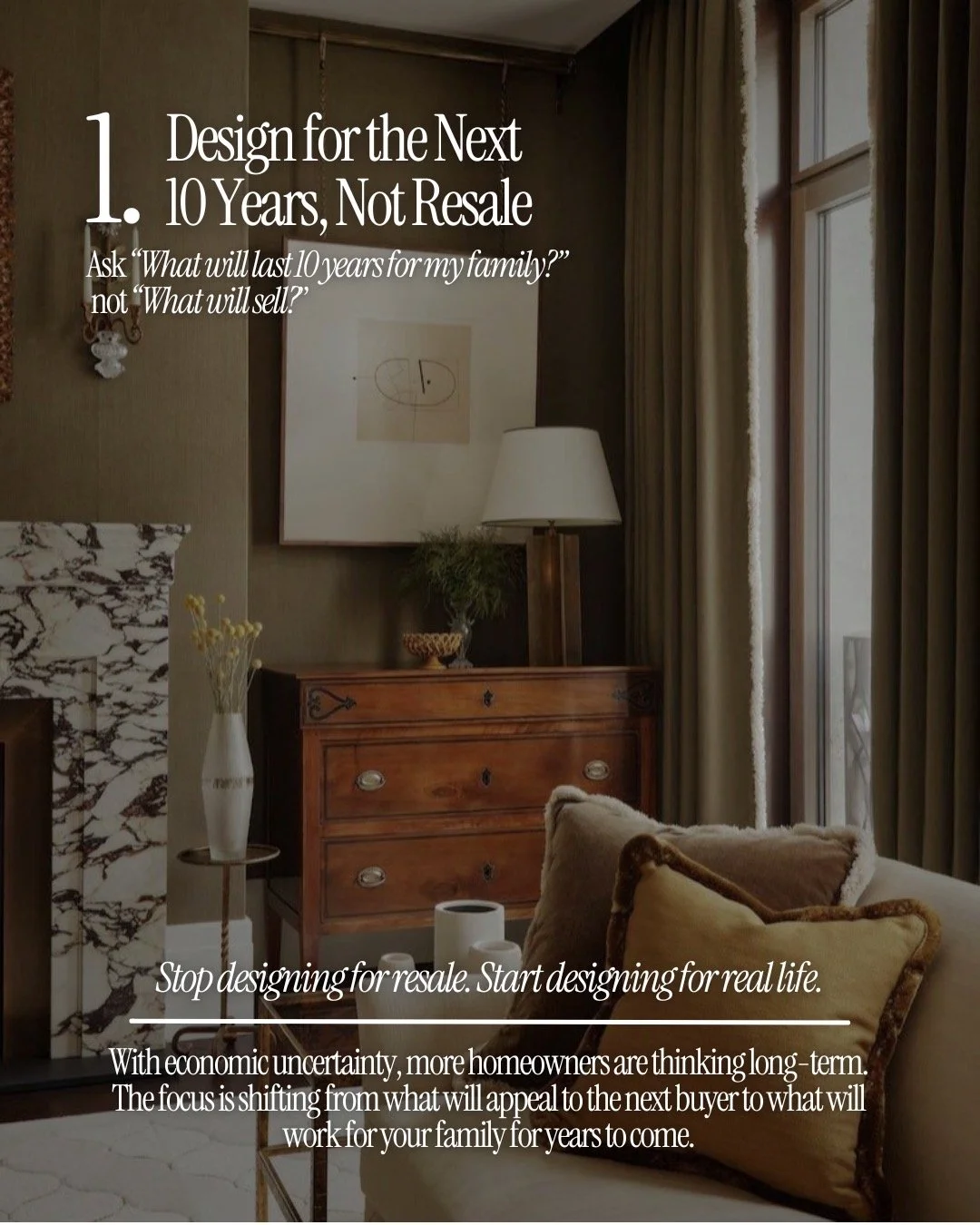
Design for the next 10 years, not just resale. Homeowners are making choices around how they actually live rather than trying to anticipate every future buyer.
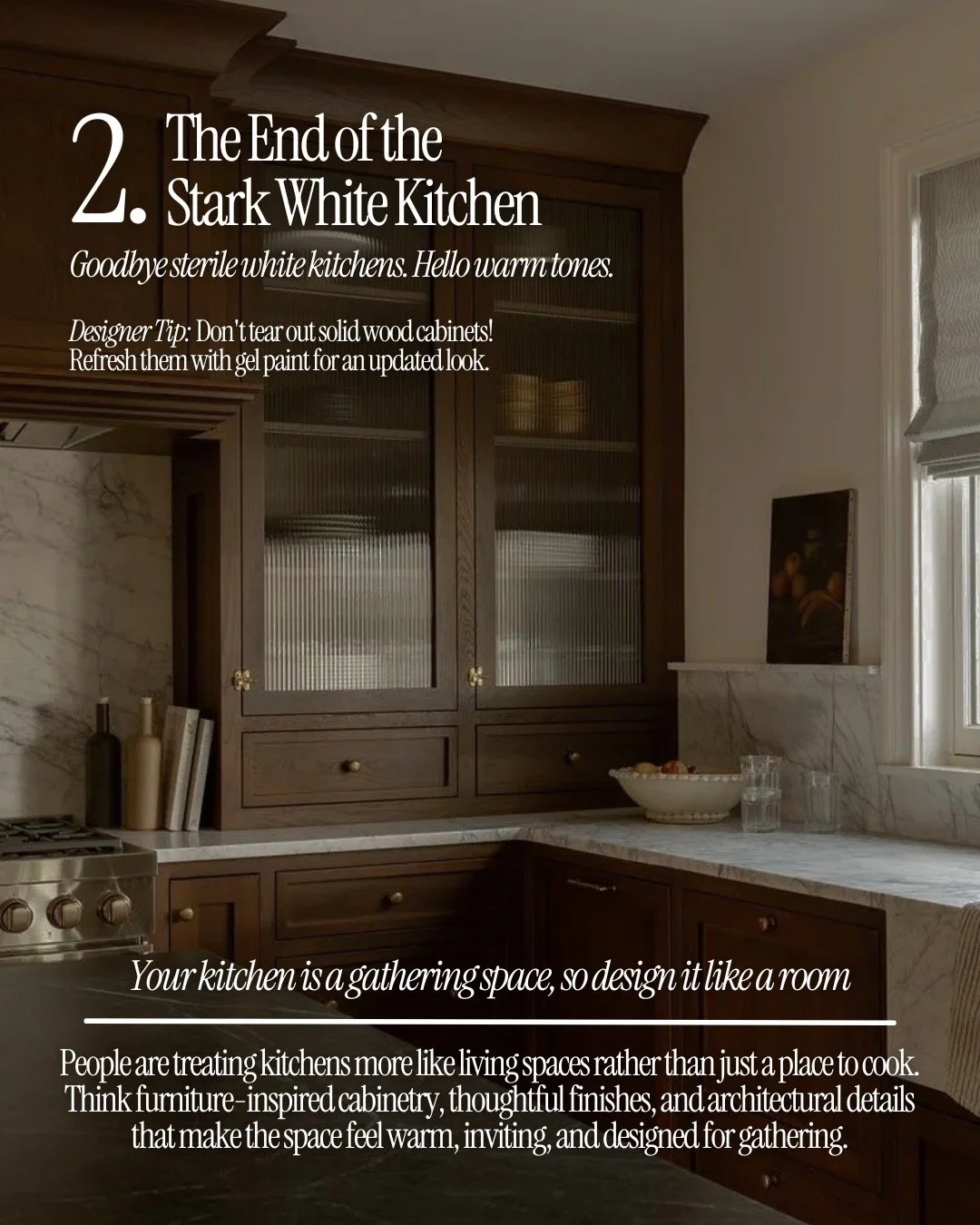
Warmth is replacing stark white. Honey-toned woods, richer colors, natural stone and mixed metals are bringing more depth to interiors.
Work with what you have before replacing it. Existing hardwood, solid wood cabinetry and other quality materials can often be updated rather than removed.
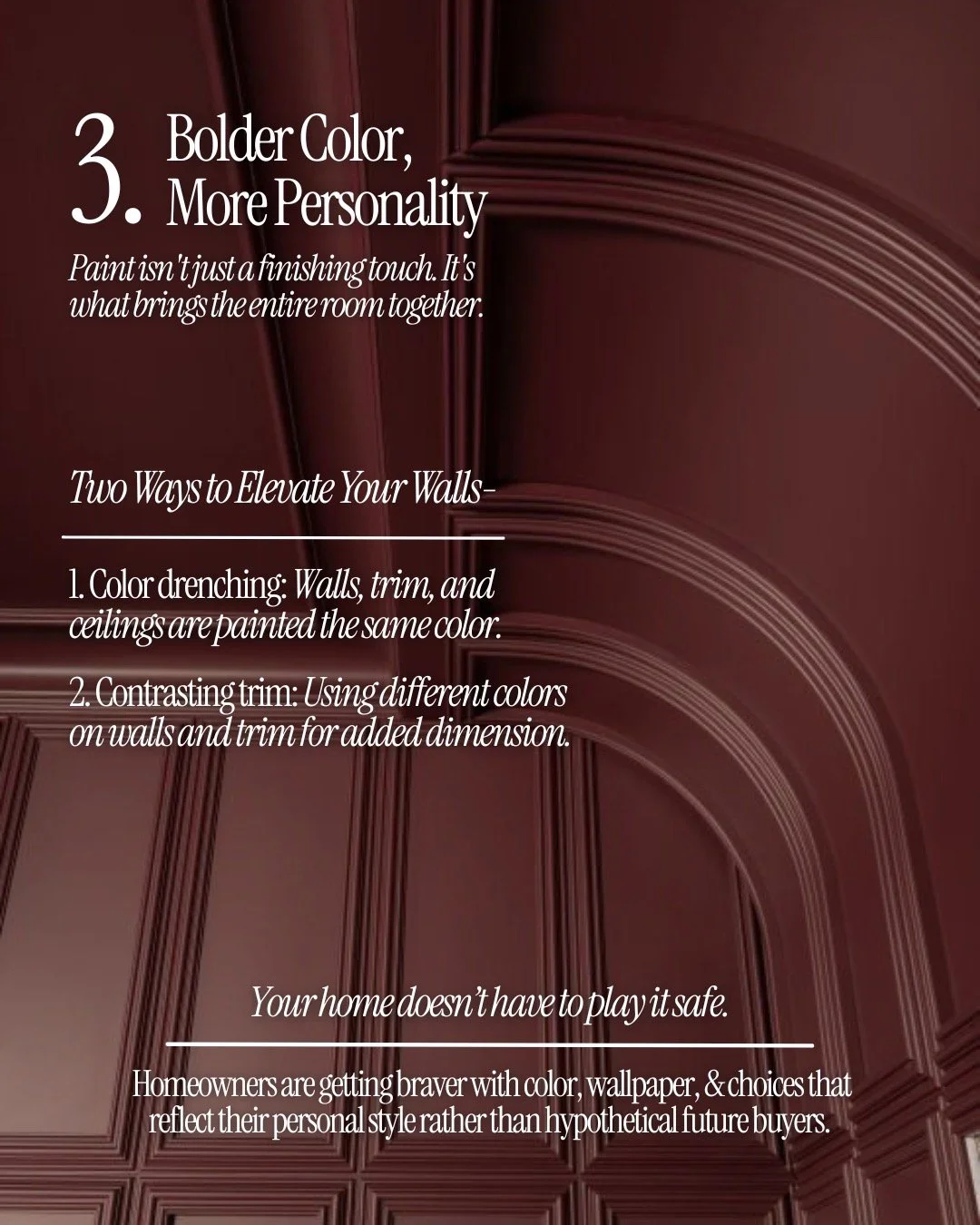
Color is getting more confident. Burgundy, oxblood, brown and green are showing up alongside color-drenched rooms and contrasting trim.
Kitchens are becoming cleaner and more furniture-like. Marcie is seeing fewer sinks and cooktops on islands, more architectural cabinetry and more attention to how kitchens function as gathering spaces.
What Are Interior Designers Actually Telling Clients Right Now?
We spend a lot of time talking with clients about which home improvements are “good for resale.”
But what if you aren’t planning to sell anytime soon?
That was one of our favorite takeaways from a recent conversation with Marcie Blanco, Principal and Founder of Ma’am Design Collective.
Marcie’s advice is refreshingly simple: stop designing every decision around a future buyer and start thinking about how you want to live in your home.
That doesn’t mean ignoring value. It means making thoughtful decisions about where to spend, what to preserve and which design choices will improve everyday life for years to come.
Here are some of the biggest shifts Marcie is seeing right now.
Should You Design Your Home for Resale?
If you expect to stay in your home for years, Marcie recommends asking a different question:
“What will last 10 years for my family?”
That might mean choosing the kitchen layout that works better for the way you cook, using a color you genuinely love, or creating separate spaces because your family functions better with a little separation.
There’s still value in thinking about quality and longevity. But designing every room around what an unknown buyer might want someday can leave you living in a home that never really feels like yours.
From a real estate perspective, we agree. If you’re preparing to sell in the near term, resale should absolutely be part of the conversation. If you’re planning to stay for another decade, livability deserves much more weight.
What Can You Keep Instead of Replacing During a Renovation?
One of Marcie’s strongest recommendations is also one of the most practical: look carefully at what you already have before tearing it out.
Solid wood kitchen cabinets are a perfect example. Rather than automatically replacing quality cabinetry, Marcie may recommend updating the finish with a durable cabinet paint or changing hardware to create an entirely different look.
The same applies to hardwood floors. Medium wood tones remain versatile, and if the existing hardwood is in good condition, refinishing it can make more sense than replacing it simply to follow a trend.
That approach can preserve character while keeping renovation dollars focused on changes that will have a greater impact.
Costs matter here, too. Marcie noted that she has seen some paint costs rise by as much as 45%, along with increases in upholstery, glass and other materials. That makes thoughtful reuse even more relevant when planning a renovation budget.
Our Busby Group Concierge can also help clients connect with trusted contractors, painters and other resources when evaluating which improvements are worth making.
Marcie’s advice: before replacing something, ask whether the material itself is dated or whether it simply needs to be reimagined.
Are White Kitchens Going Out of Style?
We wouldn’t call the white kitchen “out,” but Marcie is definitely seeing clients move away from the stark, all-white look.
Warmth is coming back.
Honey-toned woods, browns and greens are becoming more prominent, along with richer shades such as burgundy and oxblood. Mixed metals are also helping kitchens feel collected rather than overly coordinated.
Even appliances are becoming part of the color story. KitchenAid, for example, now offers major appliances in Juniper, a deep green-blue finish, alongside warmer finishes and customizable hardware.
Marcie’s philosophy isn’t to fill every surface with color. She describes the approach more as restraint with a punch.
A room can remain calm and timeless while one strong element, a cabinet color, stone, appliance, wallpaper or painted trim, gives it personality.
And before committing to paint, test it in the actual room. Large-format samples such as Samplize can be moved between walls so you can see how a color changes from morning light to evening.
What Paint Colors and Finishes Are Designers Using Now?
Paint is becoming part of the architecture rather than simply the background.
Two approaches Marcie is using and seeing more often are:
Color drenching: Painting the walls, trim and sometimes ceiling the same color to create an enveloping, cohesive room.
Contrasting trim: Using a different color on trim, doors or millwork to add dimension and highlight architectural details.
The contrast doesn’t have to be dramatic. A subtle shift can add depth, while burgundy, oxblood, deep green or brown can create a much stronger statement.
The larger point is that homeowners are becoming more comfortable making choices that reflect their own style.
Your home doesn’t have to play it safe simply because you may sell it someday.
What Countertops Are Designers Choosing Instead of Standard Quartz?
Natural stone is becoming a bigger part of Marcie’s material conversations.
She’s using and considering stones with more personality, including green quartzites, creamy natural stones and darker materials such as Black Pearl granite in honed or leathered finishes.
A leathered finish creates a softer, textured appearance instead of the highly polished surface many homeowners associate with granite.
There’s also another conversation happening around engineered stone, commonly called quartz.
Worker safety has become an important industry issue because cutting and fabricating stone can release respirable crystalline silica. Engineered stone can contain particularly high concentrations of silica, which has increased attention on fabrication practices and alternative materials.
For homeowners, this doesn’t mean every quartz countertop suddenly needs to come out. It does mean material selection is becoming a broader conversation involving appearance, durability, fabrication, cost and how a product is made.
How Are Kitchen Layouts Changing?
One of the most interesting things Marcie mentioned has nothing to do with color.
She’s seeing fewer sinks and cooktops placed in kitchen islands.
Keeping the island clear creates a cleaner visual line and allows it to function more like a piece of furniture. It also gives families one large uninterrupted surface for serving food, homework, entertaining or simply gathering around the kitchen.
Cabinetry is becoming more furniture-inspired, too, with richer finishes, architectural details and thoughtful hardware.
Marcie also shared a smart way to create a more customized range hood without necessarily starting with expensive custom millwork. A standard hood insert can be paired with a wood surround, then painted or plastered to create an architectural focal point.
It’s another example of spending strategically rather than assuming every design detail has to be the most expensive option.
Are Open Floor Plans Still Popular?
The answer is becoming much more nuanced than simply “open” or “closed.”
Marcie is seeing more interest in hybrid layouts, but the right answer depends on the size and architecture of the home.
Families still want connection between kitchens and everyday living spaces. At the same time, years of living, working, studying and entertaining at home have made separate rooms valuable again.
A dining room, office, den or sitting room can provide flexibility that one enormous open space can’t.
This circles back to Marcie’s original point: design for how you live.
If your family gathers around one large kitchen island every evening, design around that. If someone works from home and needs a door that closes, preserve the room. If you love hosting formal dinners, don’t eliminate the dining room because someone tells you open concept is better for resale.
The Best Trend May Be Making Your Home More Personal
Our biggest takeaway from talking with Marcie wasn’t a particular color or material.
It was permission to stop treating your home like it’s permanently being prepared for its next owner.
Good design can still be thoughtful about value. Preserve quality materials. Spend where the improvement matters. Consider longevity. Avoid unnecessary renovations.
But if you’re going to live in a home for the next 10 years, it should work for your life during those 10 years.
That might mean honey-toned cabinets instead of white. Burgundy walls instead of beige. A clean island without a sink. A room with an actual door.
The goal isn’t to chase what’s trending.
It’s to create a home that feels good to live in now and still makes sense years from now.
ABOUT OUR EXPERT
Meet Marcie Blanco of Ma’am Design Collective
Marcie Blanco is the Principal and Founder of Ma’am Design Collective, a Chicago interior design firm working across residential design and real estate development.
Ma’am approaches design as a collaboration, creating spaces tailored to the individual or family rather than relying on a one-size-fits-all aesthetic.
Interior Design Trends for 2027: FAQs
Are white kitchens going out of style in 2027?
White kitchens aren’t disappearing, but warmer materials are becoming increasingly important. Designers are incorporating honey-toned wood, natural stone, mixed metals and richer colors to create kitchens with more depth and personality.
What colors are trending in interior design?
Marcie is seeing continued interest in browns and greens along with richer shades such as burgundy and oxblood. Color drenching and contrasting trim are two ways to introduce these colors without redesigning an entire home.
Should I renovate my home based on resale value?
It depends on your timeline. If you expect to sell soon, buyer preferences and expected return should be part of the decision. If you plan to remain in the home for another 10 years, functionality, durability and your own lifestyle should carry significantly more weight.
Should I replace solid wood kitchen cabinets?
Not automatically. Quality solid wood cabinetry can often be refinished or painted and paired with new hardware. Before replacing cabinetry, compare the condition and quality of what you have with the cost and benefit of starting over.
Are open floor plans still in style?
Open layouts remain popular, but hybrid floor plans are giving homeowners more flexibility. The best layout depends on the size and architecture of the home and how the household uses each space.
Are quartz countertops safe?
Finished countertops in the home are not the primary occupational concern. The significant risk involves workers inhaling respirable crystalline silica dust when stone products are cut, ground, polished or otherwise fabricated. Material selection and safe fabrication practices are increasingly part of the countertop conversation.